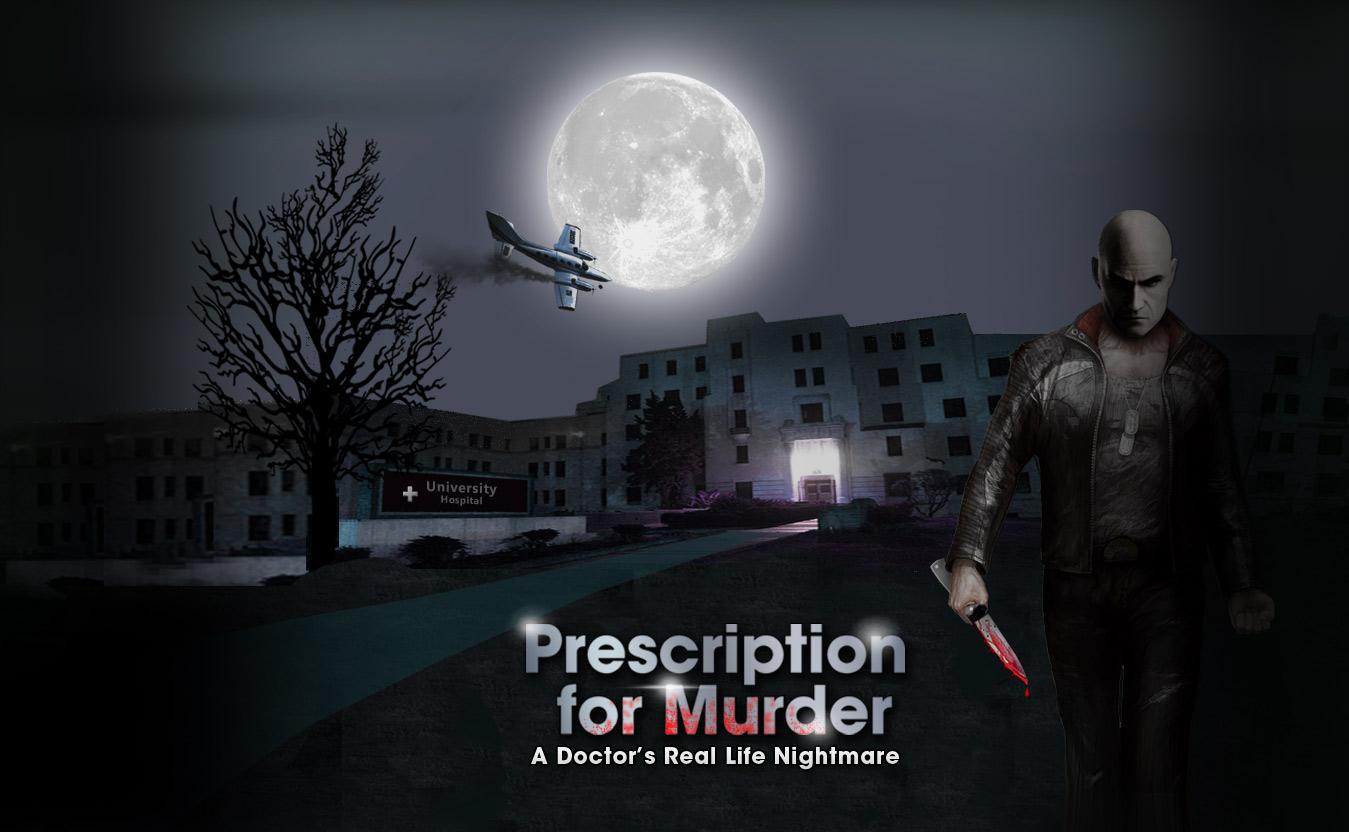
About The Book preview of what's inside
Prescription For Murder is the story of one doctor who beat the odds.
Almost killed in a serious automobile accident when he was in college, he decided to dedicate his life to saving others, but over the course of the next few years after he started his practice, that life would take a terrible new direction.
His wife would run off with another man; his medical practice was in shambles, and things were about to get worse!
He was about to give up completely, when through a series of transformative events, his life changes direction.
Although rocky at first, the doctor eventually becomes involved in a vast medical enterprise that enjoys tremendous success – and even his personal life improves when he falls in love, and marries. What Doctor Christopher Knight doesn’t realize is that he has entered the world of Russian gangsters, Italian mobsters, and double-dealing associates who will use him, betray him, and ultimately murder him as part of an elaborate insurance scam designed to end his life and line their pockets from the tragic “accident”.
With time running out and his world crumbling all around him again, Knight must decide whether to retreat or fight back – he chooses to fight.
With the help of the FBI and Organized Crime Strike Unit, the doctor must call upon his special skills as a jet pilot and an experienced Black Belt in the Martial Arts, to turn the tables on his adversaries.
In a true David versus Goliath adventure, Knight is about to expose an evil conspiracy that spans 20 years, reveal a murderous group of men and women, and exact some justice – but will it work and will it be enough?
With the lives of his family hanging in the balance, it’s time for Doctor Christopher Knight to throw caution to the wind and take matters into his own hands.
Samples PREVIEW OF WHAT'S INSIDE
CHAPTER ONE
Not So Friendly Skies
T he wheels of the airplane made that usual
clunking sound Christopher Knight was so accustomed to hearing as they drew up into the fuselage and the small craft lifted off runway 27 and into the sky like an iron bird released from its cage. He always loved hearing the humming and bumping noises the hydraulics made as the landing gear thumped into place, and he could feel the sensation of lift. Somehow the symphony of sounds they created together gave him comfort, and Knight never felt more alive than when he was soaring through the heavens like some mythological god. Even as a small child, Knight would sometimesspend hours staring up at the sky and wondering what kept those big airplanes aloft.
“Golden Eagle 421 delta x-ray - climb and maintain 4000 heading 240. Contact Washington Center 121.7,” barked the air traffic controller through Knight’s headgear.
Knight quickly responded: “Up to 4000, 240, 121.7 – 421 delta x-ray.”
He glanced over at his attractive assistant, Anna, who clearly didn’t share his fondness for flying.
“You okay?” he asked in the most comforting tone he could muster up.
“I’m fine,” she replied, clearly believing that any extra movement on her part could suddenly throw the aircraft off balance and plummet them both to their untimely deaths.
“Things might get a little bumpy in the clouds,” Knight warned, hoping to prepare her for what was coming.
Christopher Knight understood all too well that the slight turbulence that was coming was merely a changing of wind direction and velocity that usually occurred when entering a cumulus cloud formation. It was a jostling he had experienced numerous times in the past, but his frightened assistant had no such familiarities to draw solace from.
“How bumpy?” Anna quickly asked as her eyes locked on the coming white fluff like it was her waiting coffin. A little bumpy, was not the phrase she wanted to hear from her protector, as the muscles in her lower back and stomach tightened. Knight smiled; he needed to calm his nervous passenger.
“Just a little,” he replied, and hoped that it really was just a little bumpy this time. He knew that when vaulting through the clouds sometimes things got rough.
The twin-engine, pale yellow Golden Eagle was Christopher Knight’s pride and joy. He’d always dreamed of owning his own high performance twin Cessna someday, so once he could actually afford to have one, he wasted no time finding one and then buying it.
Knight glanced over at Anna again fearing that if the coming turbulence was rougher than he expected, it would almost certainly force her into cardiac arrest. But luckily for his pretty assistant, Knight was a seasoned medical doctor and one of the best cardiologists in the country, so she was in good hands.
Anna took a deep cleansing breath, closed her pretty blue eyes, and sank back into her seat like
a child ready to get her first tooth pulled. Was this going to be her last day of living; or would the invisible sky gods have mercy on her tormented soul? The twin-engine bird penetrated the cumulus cloud deck at 800 feet as if it were showing off for the sky, but then things got more than a little bumpy as the aircraft shook and rattled through the temporary windstorm.
Anna wasn’t a religious woman by any means, but when Knight glanced over at her again, he could have sworn he saw her lips mouthing a prayer. It seemed that old saying was true: there really were no atheists in fox holes or in jostled airplanes.
At first everything felt normal enough as the aircraft pitched this way and that way; up, and then down again as it moved valiantly through the cloud. But then things changed just enough to feel slightly disquieting, and those unexpected bumps
and jerking movements indicated to Knight that everything wasn’t routine. The motion seemed to peak with a strange vibration that felt very unnatural as it hummed all around Knight like looming doom. He couldn’t quite put his finger on it yet, but the odd shuddering that was coming up from the floorboard seemed to be getting worse rather than subsiding with the climb.
With over 3300 hours logged as a pilot in command of more than thirty different aircraft, Christopher Knight knew exactly what air turbulence was supposed to feel like, and unfortunately this wasn’t it. That’s when the airplane began to shake and rattle like some giant hand had a hold of it and was angry. An uneasiness crept into Knight’s gut like an unwanted stranger as he snuck another quick peek at Anna who by then was locked back against her seat like she was pulling 10 G’s, and clinging on to her armrests like they were her only salvation. Perhaps there really was something to
be worried about this time, Knight thought to himself briefly. But of course his assistant, who was deathly afraid of flying, would be rattled by even the slightest turbulence or noise, so he wasn’t sure she was a very good indicator. Nevertheless, something seemed dreadfully wrong and Knight always had great instincts when it came to impending doom.
His stomach tightened, and his mind wrestled with all the tragic possibilities as the knocks and jolts grew even more violent and filled the cockpit with their unholy rhythm. Knight was never one to panic, but this time he might make an exception.
“Washington Center, Golden Eagle 421 delta x-ray level at 4000, moderate chop,” he pronounced, making sure there wasn’t even a hint of concern in his tone.
After a few seconds of listening hard for a response, the air traffic controller’s mechanical voice responded through the headset.
“Roger 421 DT. Climb and maintain 6000.” The controller’s words were welcome, but hardly comforting as Christopher knew that something was dreadfully wrong with the plane. And then there was that slight sensation of warmth that traveled up each of his arms like fire ants – that didn’t help either. It wasn’t a soothing warmth like the kind you feel inside your home snuggled up by the fireplace on a cold winter’s eve; but a contentious heat that one might feel standing too close to a burning building or strapped into an airplane that was just about ready to burst into flames.The Twin Cessna climbed at a rate of 1000 feet per minute and Knight was anxious to break through the clouds at 12,000 feet and to the awaiting blue sky. Somehow a part of him felt things would be better by then. He quickly scanned the instrument
cluster again, and noticed that the cylinder head temperature was climbing in the right engine – that was never a good sign. Anna opened her eyes long enough to notice the intensity on Knight’s face. That wasn’t what she wanted to see.
“Are we going to die?” she asked in the most serious tone Knight had ever heard come out of her.
“Of course we’re going to die!” he answered. Anna stiffened up. She knew it!
“Just not today,” he continued in a matter of fact tone.
Anna breathed a sigh of relief and glanced out the window at the right wing. It seemed her reprieve from certain death was short lived as she watched the black smoke surround the right wing like a death blanket.“Doctor, look!” she screamed. Knight glanced out
the right side window, and his heart beat painfully hard in his chest as he watched a stream of thick ebony liquid flow like shallow rapids over the right engine housing and sprinkle the sky. Anna sank back into her seat again and closed her eyes tightly. This time there was no doubt she was praying. Knight saw that the right engine oil pressure gage was dropping fast as the cylinder head temperature climbed toward the red line. Things were going from bad to worse real fast. Knight knew that without oil, the engine would quickly seize up, and that an engine failure in low IFR conditions was almost always fatal. Suddenly, the right engine started spitting and sputtering like an old car running out of gas, which forced the plane to shudder and jerk like a dying machine.
Wash center, 421 delta x-ray. We’re at 4,500 feet and my right engine is losing oil pressure! I’m gonna have to shut it down!”
“Do you want to declare an emergency?”
the ATC quickly asked.“Yes! I need vectors to the nearest airport with an ILS and a long runway. I’m going to have to shoot the approach on one engine!” Knight knew that shooting an instrument approach on one engine in low IFR meteorological conditions was the greatest challenge a pilot could ever face, but he didn’t seem to have a choice. No sooner had Knight finished his call back to Air Traffic Control, when even larger billows of black smoke filled the air around the right wing. This was no time to panic, but for a moment “panic” was all Knight could do. He remembered something that his flight instructor always told him when they were in the air: “Aviate, Navigate and Communicate” – and then he would say: “Fly the airplane, stupid! Just fly the airplane!” Somehow calling up that obnoxious memory and catch phrase shocked Knight back into reality, and the sudden panic submitted to what he knew he had to do. In his mind he quickly went through the drill – Identify –
going to mixtures rich, full pitch on both props and full power on both engines- throttles to the stops. Suddenly the nose of the airplane began yawing or turning to the right side. As the mantra goes: “Dead foot, dead engine.” Knight stomped on the left rudder to halt the yaw and straighten the nose of the airplane from its rightward movement. Verify – he pulled back the throttle on the right engine, but nothing happened, and then suddenly the right engine was gone. More black smoke poured out from the right nacelle or engine housing, and it was in that moment that Christopher Knight realized that he and Anna were going to die badly. Knight’s mind began to play a game of mental ping pong - between battling his fear of dying and following his instructor’s commandment to just fly the airplane, stupid.
Now, at the maximum performance power setting on the left working engine, Knight needed to clean up the airplane so that it could fly on just one engine, but that wasn’t going to be easy. He
pulled back on the throttle and mixture and feathered the right propeller to reduce drag from the wind-milling prop. He skillfully banked the airplane five degrees into the operating left engine and applied a hard left rudder with his left foot to keep the nose of the aircraft straight. At least he could still do that.
Even though the aircraft was flying level for the moment, the fuel-heavy bird was having trouble maintaining altitude, and Knight knew they were on borrowed time.
Then the ATC barked out a new heading through Knight’s headset:
“Golden Eagle 421DT, turn left heading two nine zero – descend and maintain 2000 feet! Vectors for ILS 24 Trenton. Contact New York Center, 134.6.” Knight’s head was pounding with a toxic mixture of dread and doom, but he had to keep it together – if that was possible.
He banked the plane slowly and cautiously because the slightest miscalculation could spell disaster. He knew that any loss of control would mean certain death for both him and his assistant, who by the way, was nothing more than a puddle of sweat, nerves and barely conscious by then – and perhaps that was a good thing. Knight struggled to maintain some level of control, but the aircraft wouldn’t have it, and he was on the brink of losing command of everything, including himself. The right wing was still burning, and he knew that it couldn’t bare the stress much longer.
The cockpit temperature was almost insufferable by then but it wasn’t the heat forcing that sweat from Christopher Knight’s brow; it was the overwhelming strain of controlling the panic welling up inside his gut. He loved to fly airplanes and never once considered the possibility that flying might be his demise. But that was all he could think about now between trying to keep
the plane airborne and praying that hell wasn’t so bad. He quickly turned his navigation radio to 110.6 for the ILS runway 24 at Trenton.
“421 delta x-ray at 2000 heading 290,” he announced to the ATC. The response was immediate:
“Golden Eagle 421 delta x-ray cleared for the ILS 24
Trenton. Report passing 1000. Emergency crews are on the runway.”
About The Author
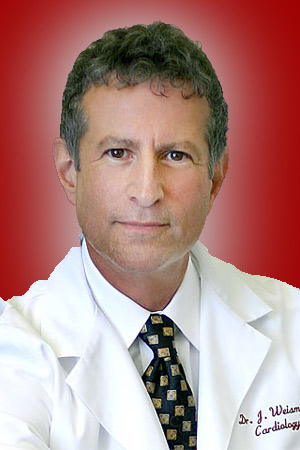
Dr. Jeffrey S. Weisman is a nationally recognized board certified cardiologist who has been providing cardiovascular care to patients since 1980. As the founder of Regional Cardiology Consultants, his practice provides a comprehensive array of cardiovascular services to internists and primary care physicians in Pennsylvania and New Jersey.
Dr. Weisman began his practice in 1980 as the Director of the Special Care Unit at Rolling Hill Hospital, a large 38-bed critical care unit.
He later became Chairman of the Department of Medicine at Oxford Hospital. After leaving Oxford Hospital, he was appointed Chairman of the Department of Medicine and Director of the Echocardiography Lab at John F. Kennedy Memorial Hospital in Philadelphia.
Dr. Weisman's shift from medical practitioner to entrepreneur began back in the late 1980's with the creation of a mobile nuclear medicine and ultrasound services Company that served hospitals and clinics around the country that otherwise would not have access to this type of diagnostic equipment and expertise. His Company was acquired by a publicly traded company in 1995.
After selling his successful imaging business, Dr. Weisman founded DigiSoft - a company dedicated to developing medical imaging software for the emerging hand-held computer market. Pocket PC Magazine nominated DigiSoft’s image viewing applications for its “Software of the Year 2001, 2002, 2003 and 2004” award.
Dr. Weisman is an accomplished inventor, holding four patents that improve the quality and functionality of medical imaging.
Following a successful showing in the world of medical software, Dr. Weisman turned his attention to a market very close to his heart - special needs education.
Dr. Weisman focused his efforts along with those of his programming staff on developing software that would engage and benefit all children - especially those with learning disabilities. The Ultimate Learning Series of software applications were developed with this purpose in mind.
Dr. Weisman is an accomplished songwriter, having written more than 15 songs designed to teach children with learning disabilities social skills through music. His “Songs to Get Along” albumis being used by schools, therapists and families in the USA and abroad.
Dr. Weisman is board certified in Internal Medicine and Cardiovascular Diseases by the American Board of Internal Medicine. He is also board certified in Cardiovascular Computed Tomography and has achieved Level 3 status (the highest level) by the Society of Cardiovascular Computed Tomography. Dr. Weisman is Assistant Clinical Professor of Medicine, Drexel University College of Medicine.
Dr. Weisman is a Fellow of the American College of Cardiology, Fellow, American College of Chest Physicians, and Fellow of the American College of Angiology.
Dr. Weisman holds a black belt in Tae Kwon Do and is an experienced private pilot with over 3300 hours logged as pilot in command in more than twenty different aircraft.
Reviews What people are saying about the book
Buy Now SIMPLE CLICK AND BUY